Industrial piping systems rely on efficient filtration to protect pumps, valves, heat exchangers, and other critical equipment. One of the most important performance indicators of any filtration system is the pressure drop in strainer. While often overlooked, pressure drop directly impacts system efficiency, energy consumption, maintenance schedules, and equipment lifespan.
Understanding how pressure drop occurs and how to manage it can help industries reduce operational costs, improve process reliability, and prevent unexpected downtime.
What Is Pressure Drop in Strainer?
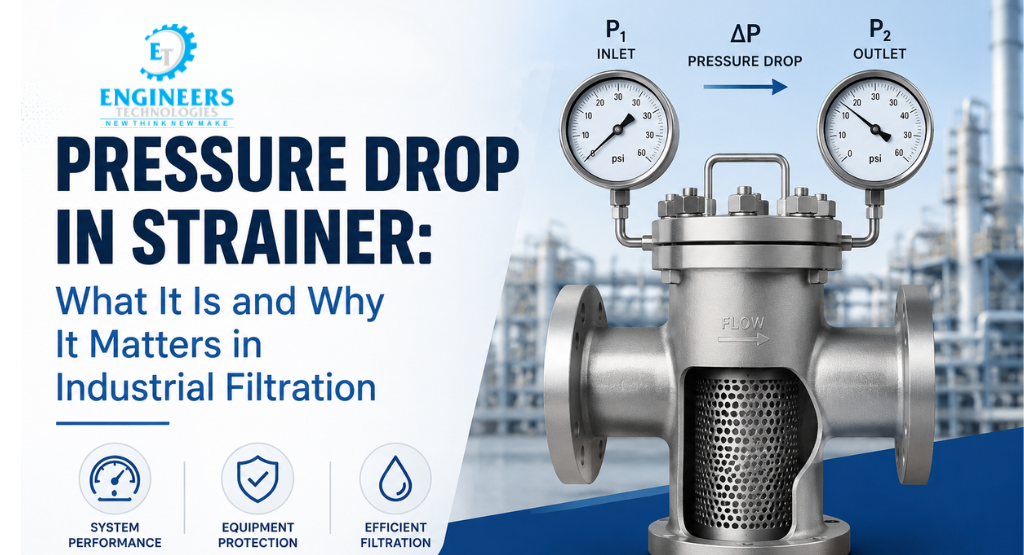
Pressure drop in a strainer is the difference between the inlet pressure and outlet pressure of the strainer. It indicates how much resistance the strainer creates within a pipeline system and serves as a key indicator of filtration performance and maintenance requirements.
For example, if the inlet pressure is 8 bar and the outlet pressure is 7.5 bar, the pressure drop across the strainer is 0.5 bar.
Why Does Pressure Drop Occur in Industrial Strainers?
Pressure loss is a natural result of fluid flowing through any filtration device. In industrial strainers, pressure drop occurs due to several factors:
Flow Restriction: As fluid passes through perforations, mesh screens, or filter elements, resistance is created. The finer the filtration, the greater the resistance.
Accumulated Debris: Over time, captured particles begin to block flow paths. As contamination increases, the pressure drop rises accordingly.
Flow Velocity: Higher flow rates force fluid through the strainer more aggressively, increasing resistance and pressure loss.
Fluid Characteristics: Viscosity, density, temperature, and fluid composition all influence filtration pressure loss.
Strainer Design: The type of strainer used—Y-strainer, basket strainer, duplex strainer, or temporary strainer—can significantly affect pressure performance.
Why Is Pressure Drop in Strainer Important?
Monitoring the pressure drop in strainer helps operators assess system health and filtration efficiency.
Protects Critical Equipment
Industrial strainers prevent debris from damaging pumps, control valves, flow meters, and heat exchangers. Excessive pressure drop may indicate clogging, reducing equipment protection.
Improves Energy Efficiency
When pressure loss increases, pumps must work harder to maintain required flow rates. This leads to higher energy consumption and operating costs.
Reduces Unplanned Downtime
A sudden increase in pressure drop often signals screen blockage. Early detection allows maintenance teams to clean or replace strainers before process interruptions occur.
Optimizes Maintenance Schedules
Pressure monitoring helps move from reactive maintenance to predictive maintenance, reducing labor costs and unnecessary inspections.
Maintains Process Performance
Many industrial processes require consistent flow and pressure conditions. Excessive pipeline pressure drop filter issues can affect ion quality and throughput.
How to Perform Strainer Pressure Drop Calculation
The most common method for strainer pressure drop calculation is determining the difference between inlet and outlet pressure.
Formula
ΔP = P₁ − P₂
Where:
- ΔP = Pressure Drop
- P₁ = Inlet Pressure
- P₂ = Outlet Pressure
For example:
- Inlet Pressure = 10 bar
- Outlet Pressure = 9.4 bar
Pressure Drop = 10 − 9.4 = 0.6 bar
In more complex applications, engineers also consider:
- Flow rate
- Fluid viscosity
- Screen opening size
- Open area ratio
- Strainer geometry
- Fluid density
Manufacturers typically provide pressure drop charts that help determine expected performance under specific operating conditions.
What Is an Acceptable Pressure Drop?
The acceptable pressure drop depends on the application, fluid type, and system design.
Generally:
| Condition | Typical Pressure Drop |
|---|---|
| Clean Strainer | 0.05 to 0.3 bar |
| Moderate Fouling | 0.3 to 0.7 bar |
| Heavy Fouling | Above 0.7 bar |
Many facilities schedule cleaning when pressure drop reaches twice the clean-screen value.
However, the ideal threshold should always follow manufacturer recommendations and process requirements.
Factors That Affect Filtration Pressure Loss
Several variables influence filtration pressure loss within industrial systems.
Mesh Size: Finer mesh captures smaller particles but creates higher resistance to flow.
Screen Open Area: Larger open areas reduce flow restriction and pressure drop.
Fluid Viscosity: Thicker fluids require more energy to pass through filtration media.
Flow Rate: Higher flow velocities increase pressure loss exponentially in some systems.
Contaminant Load: Applications with heavy particulate content experience faster pressure drop buildup.
Strainer Type; Different designs offer different flow characteristics.
Y-Strainers: Compact and economical but may have higher pressure losses at larger flow rates.
Basket Strainers: Offer larger filtration areas and lower pressure drop for high-flow applications.
Duplex Strainers: Allow continuous operation during maintenance, minimizing process interruptions.
Common Signs of Excessive Pressure Drop
Ignoring pressure loss can result in significant operational problems.
Watch for these warning signs:
- Reduced system flow rate
- Increased pump power consumption
- Pressure gauge imbalance
- Frequent equipment shutdowns
- Poor process performance
- Cavitation issues in pumps
- Increased maintenance frequency
When these symptoms appear, immediate inspection of the strainer is recommended.
How to Reduce Pressure Drop in Industrial Strainers
Proper system design and maintenance can significantly reduce pressure loss.
Select the Right Strainer: Choosing the correct size and filtration rating is essential for maintaining optimal flow.
Monitor Differential Pressure: Installing pressure gauges before and after the strainer allows continuous monitoring.
Perform Regular Cleaning: Routine maintenance prevents excessive debris accumulation and unexpected failures.
Avoid Oversized Mesh Restrictions: Using unnecessarily fine filtration may increase pressure loss without providing additional process benefits.
Use High-Quality Industrial Strainers: Well-designed strainers with optimized flow paths reduce turbulence and resistance.
Choosing the Right Industrial Strainer Supplier
When selecting industrial filtration equipment, buyers should consider more than just price.
Key factors include:
- Manufacturing quality
- Material compatibility
- Pressure ratings
- Customization capabilities
- Technical support
- Delivery reliability
- Industry certifications
- Long-term service availability
A trusted supplier can help optimize filtration performance while reducing operating costs.
Why Engineers Technologies Is a Trusted Choice
At Engineers Technologies, we provide high-performance industrial strainers engineered for reliability, efficiency, and long service life. Our solutions are designed to minimize pressure drop in strainer applications while delivering superior filtration performance.
With extensive industry experience, quality manufacturing standards, customization capabilities, and expert technical support, we help industries achieve safer and more efficient pipeline operations.
Whether you require Y-strainers, basket strainers, duplex strainers, or customized filtration solutions, our team can recommend the ideal option for your process requirements.
Conclusion
Understanding pressure drop in strainer systems is essential for maintaining efficient industrial operations. Pressure loss affects energy consumption, equipment protection, maintenance costs, and overall process performance.
By monitoring pressure differentials, performing accurate strainer pressure drop calculation, and selecting the right filtration equipment, industries can reduce downtime, improve efficiency, and extend equipment life.
Investing in high-quality strainers and proactive maintenance strategies ensures optimal performance while minimizing filtration pressure loss and pipeline pressure drop filter challenges across industrial applications.
Need help selecting the right industrial strainer for your application?
Contact Engineers Technologies today for expert guidance, customized filtration solutions, and a competitive quote tailored to your process requirements.
Read More: Y Strainer vs Basket Strainer, Best Filter Element Manufacturers

